A real Dunwoody service call: two Sub-Zeros, two different answers
Dunwoody homes were largely built in the era when Sub-Zero became the default choice for a serious kitchen, which means a lot of the units we see here are 20 to 30 years old. Some of them are worth every dollar of a repair. A few of them aren't, and we will tell you which is which before you spend anything. Here is a recent Dunwoody call that shows exactly how we work.
J. from Dunwoody called us about an older undercounter Sub-Zero refrigerator-freezer combination — a model 801 — that had stopped cooling and stopped freezing.
We found a refrigerant leak. That's where it got complicated, and where a lot of companies would have quietly taken the money anyway.
Two problems stacked up on that 801. First, the evaporator coil is no longer available — Sub-Zero doesn't make the part for that unit anymore. Second, it's an R12 system. R12 was phased out decades ago, and what little replacement refrigerant still exists is genuinely expensive.
So the math looked like this: we could charge the system, at real cost, without knowing how bad the leak was. If the leak was significant, that refrigerant would be gone in weeks and she would have paid for a repair that didn't last. With the evaporator unavailable, there was no path to a proper permanent fix.
We recommended against the repair. Not because we couldn't do it, but because it would have been a waste of her money. That 801 had reached the end of a long life.
Then we looked at the other one for free
She also had a Sub-Zero 736 built-in in the kitchen. It was running, she hadn't called about it, and nothing seemed obviously wrong. We offered a quick check at no charge while we were already there.
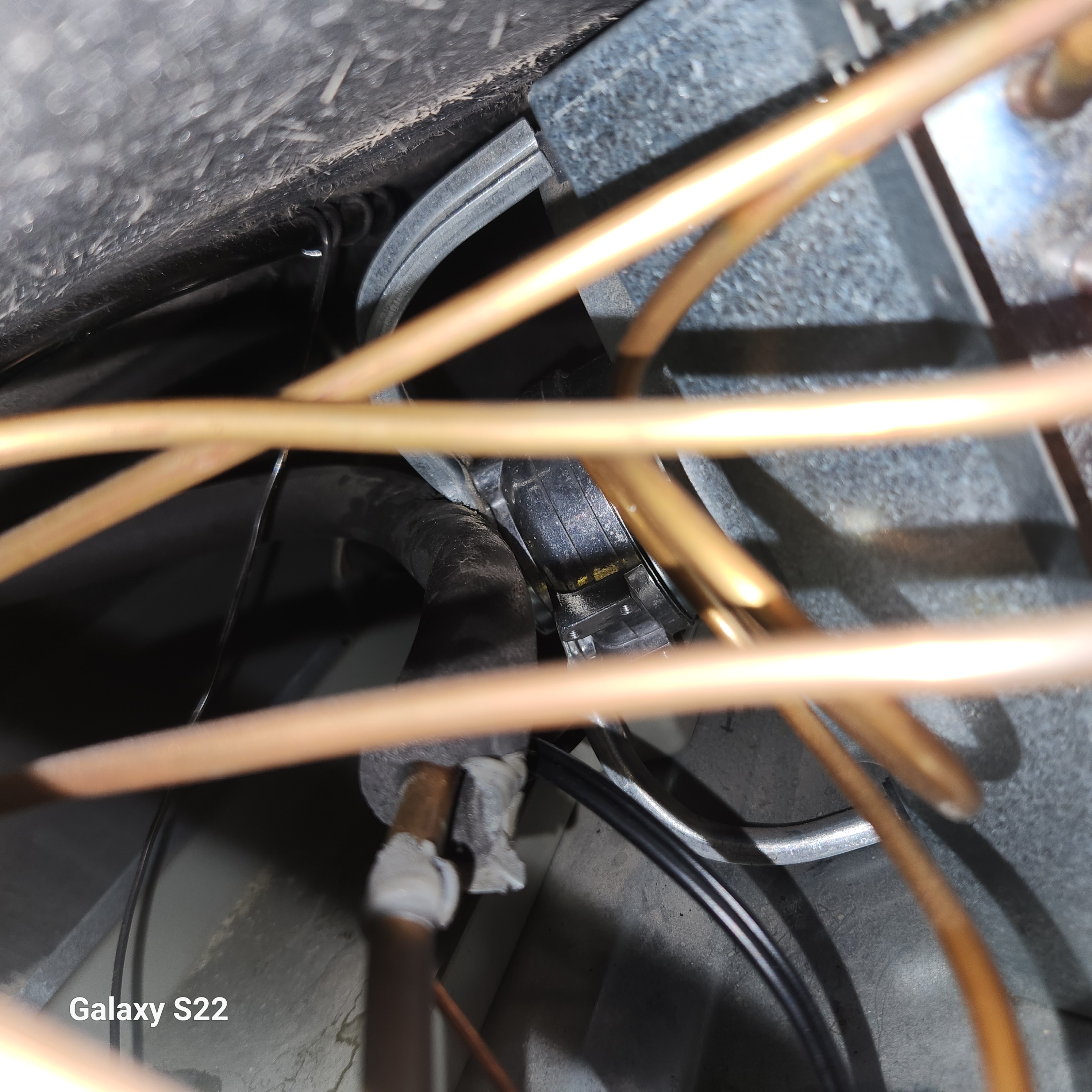
Three things stood out immediately, and none of them required a meter to find:
- The condenser fan was loud. Not air noise — bearing noise. A fan motor with a failing bearing has a specific sound, and once you've heard it you don't mistake it for anything else.
- The machine compartment was hotter than it should have been. You can feel this with the back of your hand. A Sub-Zero machine compartment runs warm, but there's normal warm and there's the kind of heat that tells you the unit is struggling to reject it.
- The Yoder loop was running far hotter than it should have been. The Yoder loop is a hidden hot refrigerant line that runs around the front perimeter of the cabinet — its job is to keep condensation and frost from forming on the door seals. Most people never know it exists. But because it carries hot refrigerant on the high side of the system, it's a very direct read on whether the unit is shedding heat properly. When the Yoder loop is running well above normal, the high side is backed up, and that means the condenser isn't doing its job.
That combination points to one of two things: a dirty condenser coil, or a failing condenser fan motor. The bearing noise made the fan motor the likelier of the two, but coil first — always check the cheap thing first. We pulled the kick panel.
The coil was clean. The fan motor was turning slowly. That settled it.
We replaced the condenser fan motor and backed it with our 1-year parts and labor warranty. Caught at that stage, it's a straightforward repair. Left alone, a condenser fan that stops moving air puts the compressor under sustained heat and load — and a compressor failure on a built-in Sub-Zero is a completely different conversation, both in price and in whether the unit is worth saving at all.
The thing we found that nobody was looking for
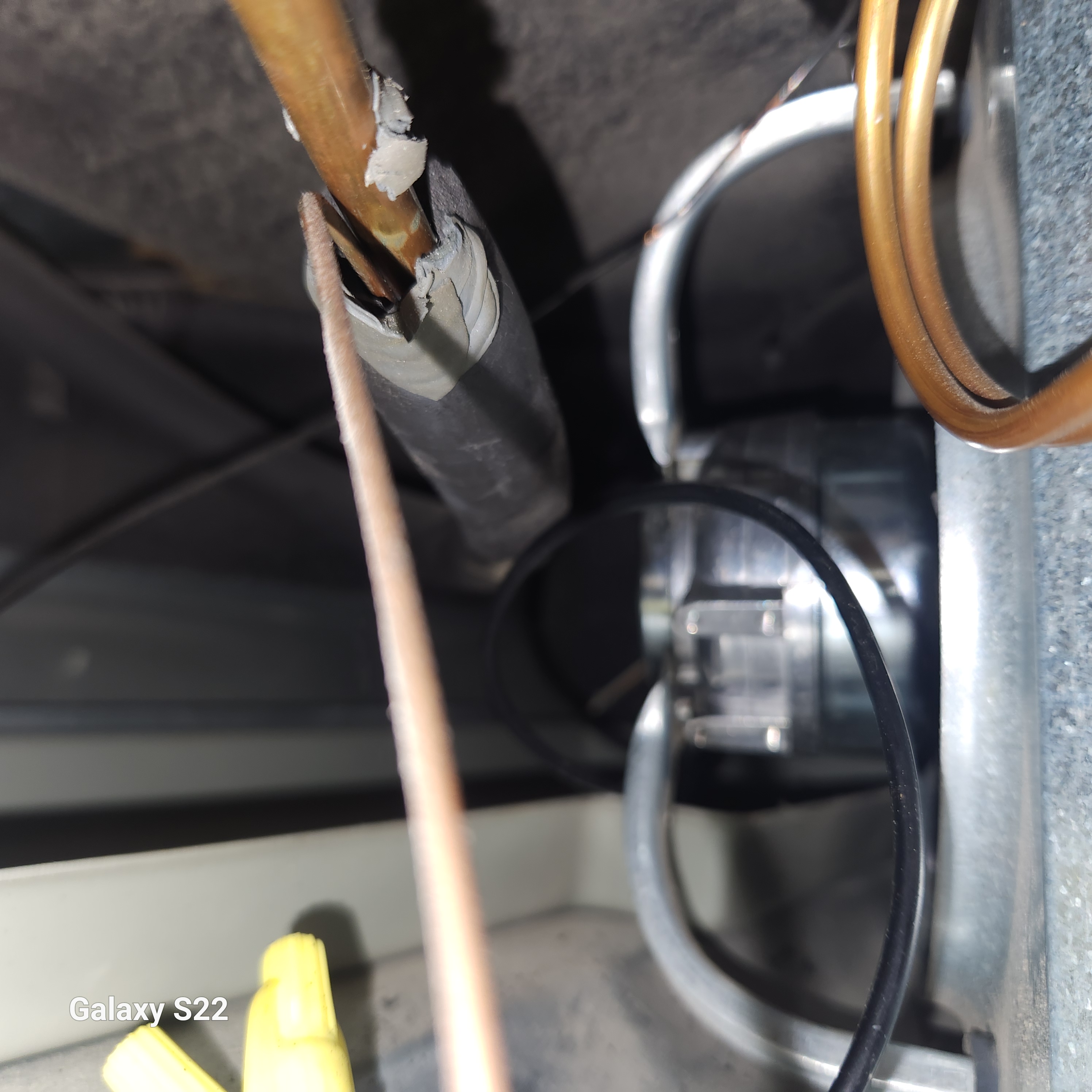
While we had the panel off, we noticed that the suction line was resting against a steel fan bracket.
Compressor vibration is constant. Over years, that steel bracket had sawed its way through the insulation and was rubbing directly against the copper line. The damage wasn't severe yet — but the direction it was heading was obvious. Eventually it punctures the line. That means a refrigerant leak, and depending on where the puncture lands, it means a repair that costs many times what we were there for.
The fix took about a minute. We bent the line clear of the bracket.
That's it. No part, no charge, no drama. A one-minute adjustment that quietly removed a future four-figure repair.
Sub-Zero models we service in Dunwoody
Built-In 600 series, Designer and Classic 700 series including the 736, PRO 48 and PRO 36, column refrigerators and freezers, undercounter refrigeration and beverage drawers (including older units like the 801), integrated wine storage, and outdoor refrigeration.
On units old enough that parts availability is in question, we check part availability before we quote — so you're not paying for a diagnosis that leads nowhere.
Why annual maintenance actually pays
Why annual maintenance actually pays Nobody gets excited about a maintenance plan. So let's be concrete about what happened on this one visit.
A homeowner who had no idea anything was wrong with her kitchen refrigerator got a failing fan motor replaced before it took the compressor with it, and a hidden line-wear problem corrected before it became a leak. Neither issue produced a symptom she could have noticed. The refrigerator was still cold. It was simply on its way to an expensive failure.
Our annual maintenance and inspection is $199, and Sub-Zero themselves recommend routine service on built-in refrigeration. What you're paying for is not a filter change. It's trained eyes and ears on the parts of the machine you never see:
Bearing noise in condenser and evaporator fans, heard before the fan fails
Condenser coil condition and actual airflow
Machine compartment, Yoder loop, and line temperatures compared against what's normal for your specific model
Door gaskets and hinge alignment, especially on units carrying heavy custom cabinetry panels
Line routing, chafe points, and vibration contact — exactly what we found here
Ice maker fill valves, water lines, and drain paths
Control and temperature calibration across both compartments
One caught fan motor or one corrected chafe point pays for years of it. Learn more about annual maintenance →
Dunwoody Sub-Zero FAQ
Schedule your Dunwoody repair
Straight answers, genuine parts, 1-year warranty. Same-day service available.